Battery charging advice can be confusing, particularly when different electric vehicle manufacturers recommend different charging routines. If you own a BYD Atto 3, Dolphin, Seal or another fully electric model, it is important to understand the battery fitted to your vehicle and follow the correct charging guidance.
Many BYD electric passenger cars use Blade Battery technology based on lithium iron phosphate, commonly called LFP. LFP batteries have different characteristics from other lithium-ion battery chemistries, but that does not mean every general EV charging rule is wrong.
What is an LFP battery?
LFP stands for lithium iron phosphate. It describes the battery’s cathode chemistry.
BYD’s Blade Battery uses this chemistry and is designed around safety, durability and efficient packaging. However, the precise charging instructions and battery-management behaviour depend on the vehicle and its software.
Understanding the chemistry is useful, but your owner’s manual remains the most important reference for day-to-day charging.
Should you charge your BYD to 100%?
This is one of the most common questions among BYD owners.
Some LFP-equipped BYD models have manufacturer guidance that includes charging to 100% at specified intervals to support battery management and state-of-charge estimation. This is not a universal instruction for every BYD model, year or battery configuration.
Check the charging recommendations for your exact vehicle. If the manual specifies a periodic full charge, follow that guidance rather than applying a generic charging rule from another EV brand.
For everyday charging, use the recommended settings and avoid assuming that a fixed percentage is suitable for every situation.
Is DC rapid charging safe?
Rapid charging can be useful on longer journeys, and BYD states that fast charging can be used safely within the vehicle’s intended operating conditions.
However, charging speed depends on several factors, including battery temperature, state of charge, charger capability and the vehicle’s maximum accepted charging power.
A charger advertised as high power does not guarantee that your BYD will charge at that rate throughout the session.
Allow the vehicle and charging equipment to manage the process as designed. If charging repeatedly stops, becomes unusually slow or triggers a warning, investigate the cause rather than assuming the battery is damaged.
What if your BYD is not charging properly?
A failed charging session does not automatically mean that the high-voltage battery has a fault.
Possible causes include:
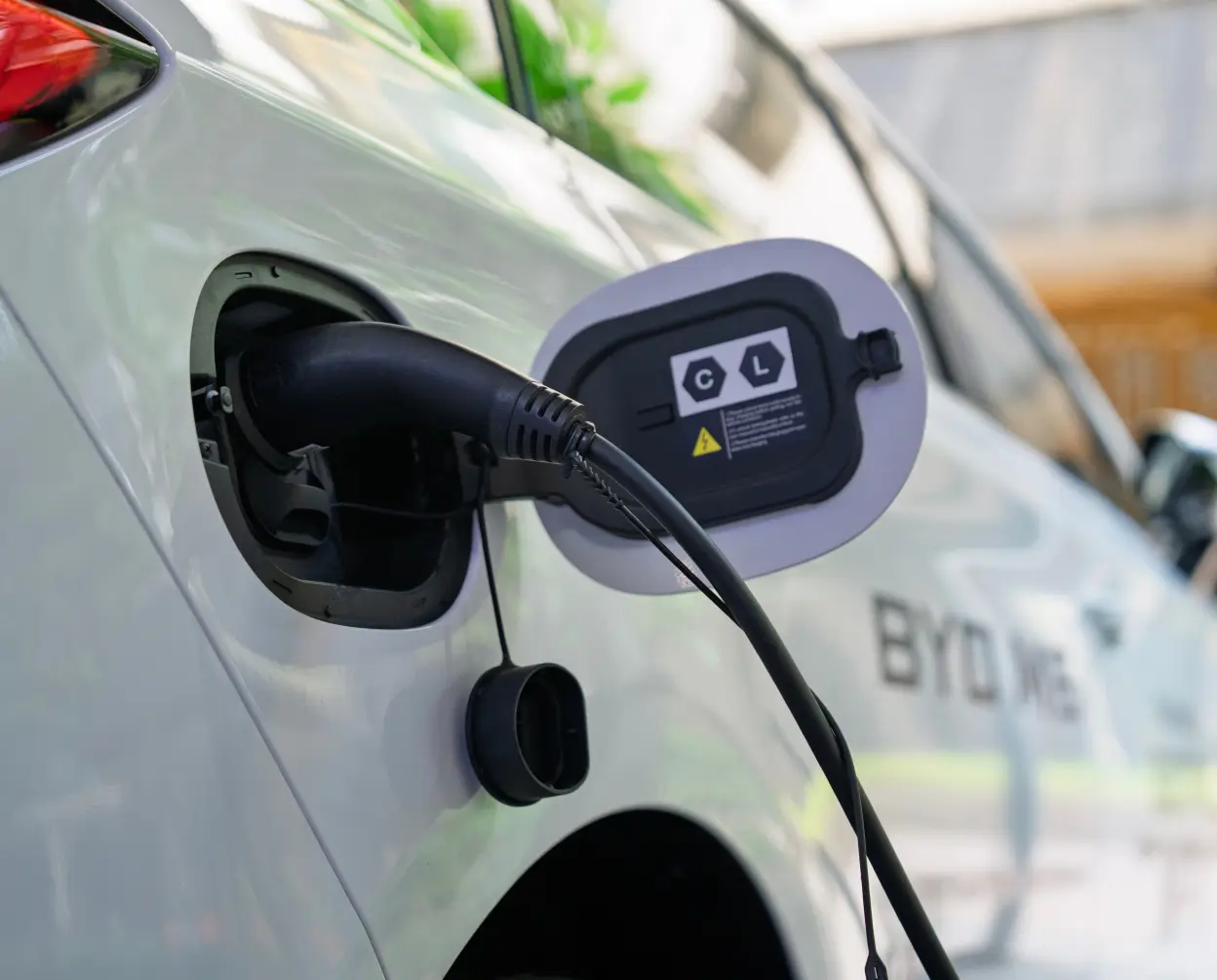
- A problem with the charging cable or connector.
- A fault or interruption at the charging station.
- Incorrect charging settings or scheduling.
- A communication issue between the vehicle and charger.
- A vehicle-side charging-system fault or warning.
If possible, note the exact message shown on the dashboard or charger. Check whether the same problem occurs at another compatible charging point, provided it is safe to do so.
Repeated failures across different chargers may justify a professional diagnostic assessment.
What about leaving your BYD unused?
If you expect your vehicle to remain parked for an extended period, follow the storage recommendations in its owner’s manual. Battery charge level, the low-voltage battery and the length of time parked can all matter.
Do not disconnect batteries or carry out electrical work unless the manufacturer’s instructions specifically allow it and you understand the procedure.
How can you help protect your battery?
Good habits include:
- Following the correct charging guidance for your model.
- Using compatible, properly maintained charging equipment.
- Keeping the charging port and connector in good condition.
- Paying attention to recurring charging warnings.
- Keeping vehicle software and maintenance up to date where applicable.
- Avoiding unapproved modifications to the charging or battery systems.
There is no need to become anxious about every charging session. The vehicle’s battery-management system is designed to manage charging within its operating limits.
Need help with a BYD charging problem?
If your BYD repeatedly fails to charge, displays a charging-system warning or behaves differently from normal, professional diagnostics can help identify the likely cause.
At BYDRepair.ie, we help BYD owners investigate charging concerns and determine the next steps.
Contact us with your model, year, warning message and details of when the problem occurs.
Charging instructions vary by model, year and software version. Always follow the vehicle-specific owner’s manual.
Official reference: BYD Ireland Battery Information.